
Introduction: The Pilgrimage That Changes You Forever
There are journeys that entertain. There are journeys that educate. And then there are journeys that transform you — from the inside out. The Panch Kedar Yatra belongs firmly in the last category.
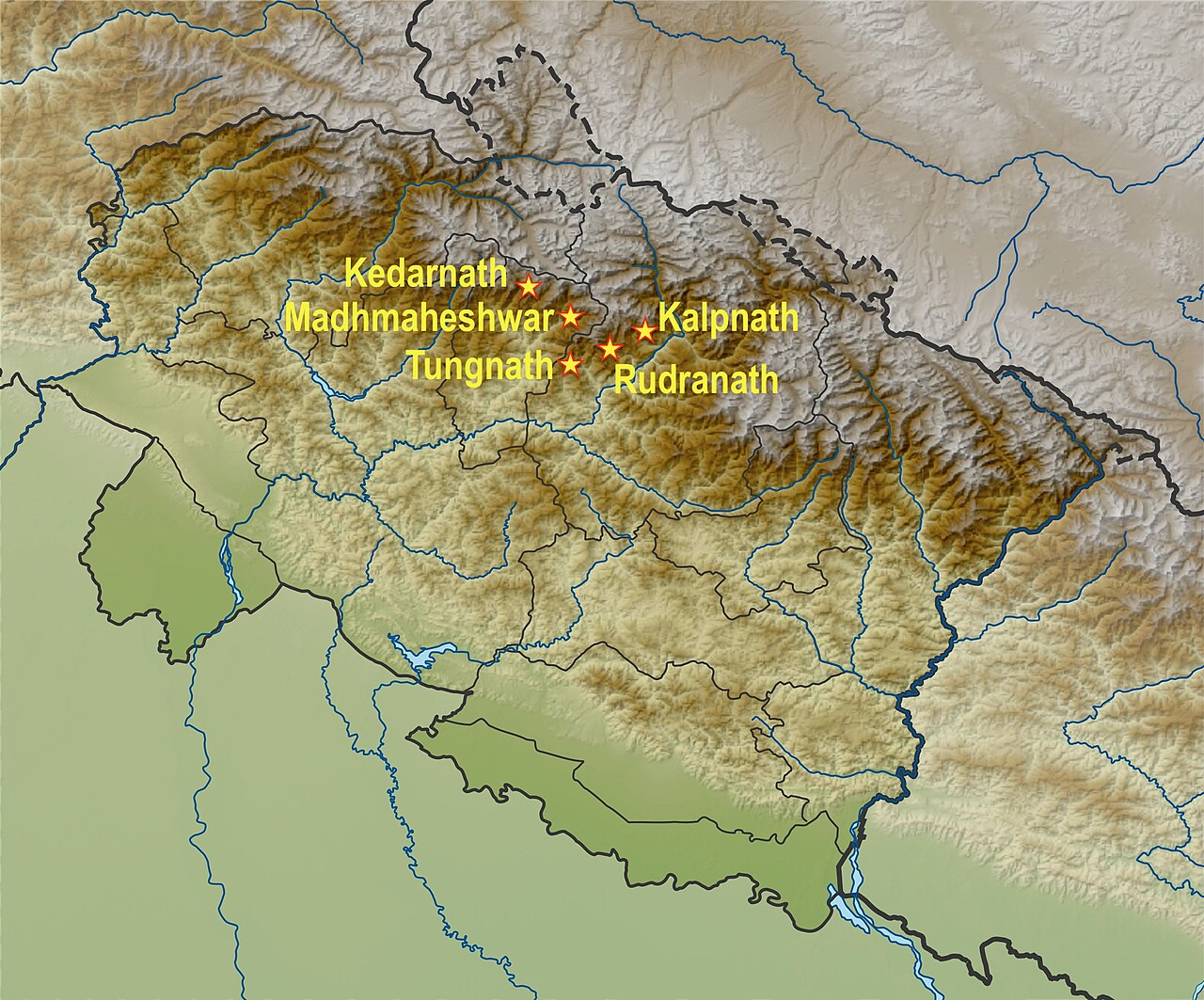
Nestled deep in the Garhwal Himalayas of Uttarakhand, the Panch Kedar is a circuit of five ancient and sacred temples dedicated to Lord Shiva — one of Hinduism’s most powerful deities. The word “Panch” means five in Sanskrit, and “Kedar” is another name for Shiva. Together, these five shrines form one of India’s most demanding, spiritually intense, and visually breathtaking pilgrimages.
Unlike the popular Char Dham Yatra, which draws millions of devotees each season, the Panch Kedar remains a relatively lesser-known circuit — yet those who complete it call it a life-altering experience. The trails pass through dense rhododendron forests, alpine meadows known as bugyals, glacier-fed rivers, and dramatic Himalayan ridgelines. At every turn, the mountains remind you of something larger than yourself.
This comprehensive guide covers everything you need to know before embarking on the Panch Kedar Yatra — the mythology behind the five temples, each temple’s unique significance, trek routes and distances, opening and closing dates for 2026, best time to visit, complete itinerary suggestions, accommodation options, packing list, safety tips, and much more.
Whether you are a devoted pilgrim seeking spiritual liberation, a seasoned trekker craving Himalayan adventure, or a curious traveller drawn to India’s ancient temple culture — this guide is your definitive starting point.
The Sacred Legend: Why Five Temples?
To truly understand the Panch Kedar, one must first understand its mythology — rooted in the epic Mahabharata, one of the world’s greatest ancient texts.
After the devastating Battle of Kurukshetra, the victorious Pandava brothers were consumed by guilt. Despite winning the war, they had killed their own kinsmen — a great sin in the eyes of Dharma. They sought the blessings and forgiveness of Lord Shiva to cleanse themselves of this sin.
However, Shiva was displeased with the Pandavas and chose to avoid them. When the five brothers arrived in the Garhwal Himalayas searching for him, Shiva disguised himself as a bull (Nandi) and mingled with the local cattle herds near Guptakashi. The Pandavas recognized him. When Bhima, the strongest of the brothers, tried to capture the divine bull, Shiva dove into the earth to escape.
But the divine bull could not disappear entirely. Different body parts of Shiva surfaced at five separate locations across the Himalayas:
- The hump appeared at Kedarnath
- The arms appeared at Tungnath
- The navel appeared at Madhyamaheshwar
- The face appeared at Rudranath
- The hair and head appeared at Kalpeshwar
Overwhelmed with devotion and gratitude, the Pandavas built temples at each of these five locations to worship Shiva in each of his partial forms. These five temples collectively became known as the Panch Kedar, and completing the circuit is believed to grant moksha — liberation from the cycle of birth and death.
This ancient legend is not merely a story. It is the soul of this entire pilgrimage. Every step on the Panch Kedar trail carries the weight of thousands of years of devotion.
The Five Temples of Panch Kedar: Detailed Guide
1. Kedarnath Temple — The Crown Jewel (3,583 metres)
District: Rudraprayag | Body Part Enshrined: Hump (back) of the divine bull | Base Camp: Gaurikund (Sonprayag)
Kedarnath is arguably the most famous of the five temples and serves as the anchor of the entire Panch Kedar circuit. Perched at an altitude of 3,583 metres in the Rudraprayag district, this ancient stone temple stands against the awe-inspiring backdrop of the Kedarnath peak and the Mandakini river valley.
Kedarnath holds a doubly significant status in Hinduism — it is both one of the 12 Jyotirlingas (the most sacred Shiva shrines in India) and part of the Char Dham circuit. The current temple structure, believed to have been originally built by the Pandavas, was later restored and reinforced by the great philosopher Adi Shankaracharya in the 8th century CE.
The deity worshipped here is a naturally formed triangular stone (swayambhu lingam), which devotees believe represents the hump of Lord Shiva in his bull form. The temple’s sanctum sanctorum is ancient and austere — grey stone walls, the scent of incense, and the sound of bells create an atmosphere that is deeply moving.
Perhaps the most remarkable story about this temple is its miraculous survival during the devastating floods of June 2013, one of the worst natural disasters in Uttarakhand’s history. A massive boulder diverted the floodwaters around the temple structure, sparing it while much of the surrounding area was destroyed. Many devotees regard this as divine protection.
Trek Details:
- Distance: 16 km from Gaurikund (one way)
- Difficulty: Moderate to Difficult
- Duration: 6–8 hours (ascent)
- Helicopter: Available from Phata, Sirsi, and Guptkashi
2026 Opening Date: 22 April 2026 2026 Closing Date: 11 November 2026 (approximately)
During winter, the sacred idol is ceremonially shifted to Omkareshwar Temple in Ukhimath, where worship continues through the cold months.

2. Tungnath Temple — The Highest Shiva Temple in the World (3,680 metres)
District: Rudraprayag | Body Part Enshrined: Arms of the divine bull | Base Camp: Chopta
Tungnath holds a remarkable distinction — it is the highest Shiva temple in the world at an elevation of 3,680 metres. Located in the Rudraprayag district, near the lush meadows of Chopta (often called the Mini Switzerland of India), this temple is the most accessible of the five Kedar shrines.
The approach to Tungnath from Chopta is an absolute delight. The trail winds through thick forests of rhododendron, oak, and deodar, which burst into blazing red and pink blossoms during spring. As you gain altitude, the treeline gives way to rolling alpine meadows carpeted with wildflowers, and the views of the surrounding Himalayan peaks begin to emerge dramatically.
The temple itself is a magnificent stone structure with carved walls, believed to be over 1,000 years old. Pilgrims worship the arms of Lord Shiva here. The puja rituals are simple and deeply traditional, performed by local priests from the surrounding villages.
A popular extension from Tungnath is the Chandrashila Peak at 4,130 metres — an additional 1.5 km climb from the temple. From the summit, on clear days, you can see a breathtaking panorama of iconic Himalayan peaks including Nanda Devi, Trishul, Kedarnath, Chaukhamba, Bandarpoonch, and Neelkanth. Sunrise from Chandrashila is one of the most photographed moments in all of Uttarakhand.
The Chopta–Tungnath range is also a birdwatcher’s paradise, home to over 240 species of birds including the Himalayan Monal (Uttarakhand’s state bird), Himalayan Griffon, Scarlet Finch, Hill Partridge, and numerous migratory species.
Trek Details:
- Distance: 3.5 km from Chopta (one way); plus 1.5 km to Chandrashila Peak
- Difficulty: Easy to Moderate
- Duration: 2–3 hours (ascent to temple)
2026 Opening Date: 2 May 2026 2026 Closing Date: Late October 2026
Winter worship is conducted at Makkumath village in the valley below.

3. Rudranath Temple — The Wild and Remote Shrine (2,286 metres)
District: Chamoli | Body Part Enshrined: Face of the divine bull | Base Camp: Sagar Village (near Gopeshwar)
Rudranath is widely regarded as the most remote, challenging, and mystical of the five Panch Kedar temples. Located at 2,286 metres in the Chamoli district, this is where the face of Lord Shiva is believed to have emerged — making it extraordinarily significant for devotees.
The trek to Rudranath is a journey through some of the most pristine wilderness in the Indian Himalayas. Starting from Sagar Village near Gopeshwar, the trail passes through dense oak and rhododendron forests, vast alpine meadows (bugyals), glacial streams, and eventually reaches the temple perched on a rocky outcrop surrounded by a landscape that feels utterly otherworldly.
Along the route, you will encounter seasonal grazing grounds, the occasional shepherd’s hut, and views of distant peaks that include Nanda Devi and Trishul. The Panar Bugyal and Pithdhar Bugyal are particularly spectacular — vast rolling meadows with 360-degree mountain views that seem to go on forever.
The Rudranath temple itself is relatively small but deeply atmospheric. A natural rock formation enshrines the face of Shiva, and the area around the temple is dotted with smaller shrines and sacred ponds. The remoteness of the location means very few tourists make it here — giving the entire experience an intimate, almost secret quality.
Because of limited signage and complex trail conditions, hiring a local guide is strongly recommended for the Rudranath trek.
Trek Details:
- Distance: 19–24 km from Sagar Village (one way, depending on route)
- Difficulty: Difficult
- Duration: 2 days (with overnight stay on trail)
2026 Opening Date: 18 May 2026 2026 Closing Date: 20 November 2026
Winter worship is conducted at Gopeshwar in the valley.

4. Madhyamaheshwar Temple — The Hidden Gem of Panch Kedar (3,497 metres)
District: Rudraprayag | Body Part Enshrined: Navel of the divine bull | Base Camp: Ransi Village (near Ukhimath)
Madhyamaheshwar — literally meaning “the middle Maheshwar” — is where the navel of Lord Shiva is believed to have appeared. Situated at an altitude of 3,497 metres in the Rudraprayag district, this temple is perhaps the least visited of the five Kedar shrines, which means it remains beautifully uncrowded and deeply peaceful.
The trek to Madhyamaheshwar begins from Ransi Village and passes through gorgeous forests of deodar and rhododendron before ascending to the elevated meadows surrounding the temple. The approach offers stunning views of the Kedarnath range and the Chaukhamba massif, one of the most majestic mountain formations in the Garhwal Himalayas.
One of the most iconic sights at Madhyamaheshwar is the reflection of the Chaukhamba peaks in the temple’s sacred pond. On a clear morning, the shimmering image of snow-capped peaks in the still water creates a scene of such beauty that many pilgrims describe it as a moment of genuine spiritual awakening.
The temple is ancient, built in the North Indian Nagara architectural style with a conical shikhara. The deity here is a natural lingam set in an elevated position, and the worship rituals follow ancient Vedic traditions. During peak season, a small cluster of tea stalls and basic dhabas operate near the temple, but services remain minimal — contributing to the temple’s pure, uncluttered atmosphere.
Trek Details:
- Distance: 16–18 km from Ransi Village (one way)
- Difficulty: Moderate to Difficult
- Duration: 8–10 hours (ascent)
2026 Opening Date: 21 May 2026 2026 Closing Date: Late October 2026
Winter worship is conducted at Ukhimath.

5. Kalpeshwar Temple — The Year-Round Shrine (2,200 metres)
District: Chamoli | Body Part Enshrined: Hair (Jata) of Lord Shiva | Base Camp: Urgam Village
Kalpeshwar is the most unique and accessible of the five Panch Kedar temples, and the only one that remains open throughout the entire year. Located at 2,200 metres in the beautiful Urgam Valley of the Chamoli district, this temple enshrines the matted hair (Jata) of Lord Shiva.
The trek to Kalpeshwar is delightfully short — just 1 to 2 km from Urgam Village — making it accessible even to elderly pilgrims and those with limited trekking experience. Yet despite its easy access, the temple feels deeply sacred and serene, set in a rocky cave with a small natural lingam inside. The surrounding Urgam Valley is one of Uttarakhand’s most beautiful and tranquil destinations, lined with ancient villages, traditional stone houses, and apple orchards.
Because Kalpeshwar is open year-round, many pilgrims plan a separate visit here outside of the main yatra season, combining it with a visit to the nearby Valley of Flowers (open July–September) or Hemkund Sahib. This flexibility makes Kalpeshwar an excellent addition to any Uttarakhand itinerary.
The cave entrance to the temple requires you to duck slightly as you enter, adding a touch of humility to the approach — a fitting posture for entering the abode of Shiva.
Trek Details:
- Distance: 1–2 km from Urgam Village (one way)
- Difficulty: Easy
- Duration: 30–45 minutes
Opening Date: Open throughout the year

Panch Kedar 2026 Opening Dates — At a Glance
| Temple | Altitude | Opening Date 2026 | Closing Date 2026 |
|---|---|---|---|
| Kedarnath | 3,583 m | 22 April 2026 | ~11 November 2026 |
| Tungnath | 3,680 m | 2 May 2026 | Late October 2026 |
| Rudranath | 2,286 m | 18 May 2026 | 20 November 2026 |
| Madhyamaheshwar | 3,497 m | 21 May 2026 | Late October 2026 |
| Kalpeshwar | 2,200 m | Year-Round | Year-Round |
Note: All official Panch Kedar opening dates are announced on Mahashivratri (15 February 2026). Dates may vary slightly based on the Hindu Panchang calendar and actual snow conditions on the trails.
Best Time to Visit Panch Kedar
The Panch Kedar Yatra has a defined season, primarily shaped by weather, snowfall, and temple opening schedules. Choosing the right time is critical for both safety and experience quality.
May–June: Peak Season (Most Recommended)
May and June are the most popular and comfortable months for the Panch Kedar Yatra. Temperatures generally stay between 10°C and 20°C, making trekking pleasant. The snow on the trails has largely melted by late May, and the alpine meadows begin to bloom with wildflowers. Rhododendrons are at their glorious peak in May, painting the hillsides in vivid shades of red, pink, and white.
All five temples are open during this period, and the days are long with excellent visibility for mountain views. The major downside is crowds — especially at Kedarnath, which attracts large numbers of pilgrims throughout the Char Dham season.
September–October: Post-Monsoon Season (Also Excellent)
After the monsoon rains clear (usually by mid-September), the entire Himalayan region transforms dramatically. The air becomes crystal clear, the vegetation turns golden and amber, and the mountain views become exceptionally sharp. October is particularly magical — the autumn light is warm, the skies are a deep cobalt blue, and the trail paths are quiet.
September–October is ideal for photography, serious trekking, and those seeking a more peaceful experience with smaller crowds. Temperatures begin dropping in October, so warm layers are essential, especially at night.
July–August: Monsoon Season (Not Recommended)
The monsoon months bring heavy rainfall, landslides, slippery trails, and severely reduced visibility. Many sections of the Panch Kedar trails become genuinely dangerous during this period. While the temples remain technically open (except for weather closures), the pilgrimage is not advisable for safety reasons.
November–April: Winter (Temples Closed)
Most temples close after October/November and remain shut until April/May. Heavy snowfall makes the trails completely impassable. The exception is Kalpeshwar, which remains accessible year-round.
Complete Panch Kedar Yatra Itinerary (14–16 Days)
This is a suggested itinerary for the full Panch Kedar circuit, starting from Haridwar or Rishikesh. Adjust based on your fitness level and available days.
Day 1: Haridwar / Rishikesh → Drive to Guptkashi (180–200 km, 7–8 hours). Check in, rest, acclimatize. Evening visit to local Kashi Vishwanath temple.
Day 2: Guptkashi → Sonprayag / Gaurikund → Begin Kedarnath Trek (16 km). Overnight stay near Kedarnath.
Day 3: Kedarnath Darshan — morning aarti, explore temple surroundings. Optional: short hike to Vasuki Tal lake (8 km further). Descend to Gaurikund. Drive back to Guptkashi. Overnight stay.
Day 4: Guptkashi → Drive to Ransi Village (~3–4 hours). Trek toward Gaundhar (7–8 km). Overnight at Gaundhar.
Day 5: Gaundhar → Trek to Madhyamaheshwar Temple (8–10 km). Darshan, explore the sacred pond and Chaukhamba views. Overnight stay at temple campsite.
Day 6: Madhyamaheshwar → Trek back to Ransi Village (16 km). Drive toward Chopta (~2 hours). Overnight at Chopta.
Day 7: Chopta → Trek to Tungnath Temple (3.5 km) and optional extension to Chandrashila Peak. Return to Chopta by afternoon. Overnight at Chopta.
Day 8: Chopta → Drive to Sagar Village via Gopeshwar (~3–4 hours). Rest and preparation for Rudranath trek.
Day 9: Sagar Village → Trek to Panar Bugyal (12 km approx.). Overnight in tents at the bugyal.
Day 10: Panar Bugyal → Trek to Rudranath Temple (5–7 km). Darshan, explore the area. Return to Panar Bugyal for overnight stay.
Day 11: Panar Bugyal → Return trek to Sagar Village (12 km approx.). Drive to Helang Village (Kalpeshwar base).
Day 12: Helang → Short drive to Urgam Village → Trek to Kalpeshwar Temple (2 km). Darshan. Return to Urgam. Drive back to Joshimath or Haridwar.
Day 13–14: Buffer days for delays, weather, and travel back to your departure city.
Pro Tip: Add at least 2 buffer days to your schedule for unexpected weather delays, rest days, or extended stays at particularly beautiful locations. The mountains don’t follow timetables.
How to Reach the Panch Kedar Region
By Air: The nearest airport is Jolly Grant Airport in Dehradun, approximately 20 km from Rishikesh. From Dehradun, you can take taxis or buses to Rishikesh or Haridwar, and then proceed to the respective base camps of each temple.
By Rail: The nearest major railway stations are Haridwar and Rishikesh. Both are well-connected to major Indian cities including Delhi, Mumbai, Kolkata, and Jaipur. From Haridwar/Rishikesh, state buses and private taxis operate to Guptkashi, Chopta, Gopeshwar, and other trailhead villages.
By Road: All the major pilgrimage base camps are accessible by road from Rishikesh. Key road routes include:
- Rishikesh → Rudraprayag → Guptkashi → Sonprayag (for Kedarnath)
- Rishikesh → Rudraprayag → Ukhimath → Ransi (for Madhyamaheshwar)
- Rishikesh → Rudraprayag → Augustmuni → Chopta (for Tungnath)
- Rishikesh → Chamoli → Gopeshwar → Sagar (for Rudranath)
- Rishikesh → Chamoli → Joshimath → Helang → Urgam (for Kalpeshwar)
Important Note: Public transportation between temple base camps is limited. Pre-booking a private cab for your entire route is strongly recommended. Roads in this region can also be disrupted during the monsoon — always check current conditions before travel.
Accommodation Along the Panch Kedar Route
Accommodation options are available across a range of budgets throughout the Panch Kedar region, though the more remote temples offer only basic facilities.
Kedarnath: Government-run GMVN guesthouses, private lodges, and tent camps near the temple. Book well in advance during peak season.
Tungnath/Chopta: Several decent guesthouses and camps in Chopta. Simple but comfortable. Chopta has developed reasonably well as a tourist base in recent years.
Madhyamaheshwar: Basic tent camps and simple stone shelters near the temple. Facilities are limited — carry sleeping bags.
Rudranath: Tent camping only on the trail. Basic huts near the temple. This is the most remote stretch of the entire circuit.
Kalpeshwar/Urgam Valley: Small guesthouses and homestays in Urgam Village. Basic but warm hospitality. A few GMVN options available.
En route towns (Guptkashi, Gopeshwar, Joshimath): These larger towns have a wider range of hotels, from budget guesthouses to mid-range hotels. These are ideal base towns for resting and restocking between temple visits.
Panch Kedar Packing List
Packing correctly for the Panch Kedar Yatra is as important as physical preparation. Here is a comprehensive checklist:
Clothing:
- Thermal inner layers (top and bottom)
- Fleece jacket or woollen sweater
- Waterproof and windproof outer jacket
- Full-length trekking trousers (2 pairs)
- Moisture-wicking t-shirts (3–4)
- Warm socks (wool preferred, 4–5 pairs)
- Waterproof trekking boots with ankle support
- Warm beanie/cap and gloves
- Sun hat or cap for daytime
- Gaiters (for snow sections, especially early season)
Gear:
- Comfortable 40–50 litre trekking backpack
- Trekking poles (especially useful for descents)
- Headlamp with extra batteries
- Sleeping bag (rated to at least -5°C)
- Reusable water bottle (minimum 2 litres capacity)
- Water purification tablets or filter
- Sunglasses with UV protection
- Sunscreen (SPF 50+) and lip balm
Health and Safety:
- Personal first aid kit
- Altitude sickness medication (Diamox — consult a doctor before carrying)
- ORS (Oral Rehydration Salts) packets
- Pain relief tablets
- Blister treatment strips
- Personal prescription medications
- Hand sanitizer
Documents and Essentials:
- Original government-issued ID proof
- Kedarnath registration printout (mandatory)
- Emergency contact list (written, not just on phone)
- Offline maps downloaded (Google Maps / Maps.me)
- Portable battery bank
- Sufficient cash (ATMs are rare or absent on most trek routes)
- Light snacks — energy bars, dry fruits, trail mix, instant oats
Difficulty Levels and Physical Fitness
The Panch Kedar Yatra is one of India’s most physically demanding pilgrimages. However, the five temples vary significantly in difficulty, and not every pilgrim needs to attempt all five.
Kalpeshwar: Very Easy. Suitable for all ages and fitness levels. A 2 km walk on a well-defined path.
Tungnath: Easy to Moderate. Suitable for fit beginners. A 3.5 km climb on a clear trail with regular resting points.
Kedarnath: Moderate. Requires reasonable cardiovascular fitness. The 16 km trek is well-paved with regular facilities. Helicopter option available for those unable to trek.
Madhyamaheshwar: Moderate to Difficult. Requires prior trekking experience and good physical conditioning. 16–18 km of sustained ascent.
Rudranath: Difficult. The most challenging of the five. Requires strong fitness, proper trekking gear, and ideally a local guide. Remote trails with limited facilities.
Preparation Advice: Begin a dedicated fitness regimen at least 4–6 weeks before your departure. Focus on daily walking or jogging, stair climbing, and core strengthening exercises. If you plan to attempt Rudranath or Madhyamaheshwar, weekend hikes of 8–12 km with a loaded pack are essential preparation.
Registration and Permits
Kedarnath Registration: A mandatory online registration is required for Kedarnath Darshan. Register through the official Uttarakhand Char Dham Yatra Registration portal. Carry a printed copy of your registration along with original ID proof. Daily quotas are enforced, so register well in advance during peak season.
Other Four Temples: Registration is not currently mandatory for Tungnath, Rudranath, Madhyamaheshwar, or Kalpeshwar, though this may change. Always check the latest requirements on the official Uttarakhand Tourism website before your trip.
Permits: Trekking permits may be required in certain protected forest areas along the route. If you are travelling with an organized trekking company, these will typically be arranged as part of your package.
Health and Safety Guidelines
The Panch Kedar Yatra takes you into high-altitude, remote terrain where medical facilities are scarce. Following these guidelines is non-negotiable:
Acclimatization: Allow at least 24 hours of rest upon reaching Guptkashi or Joshimath before beginning any high-altitude trek. Do not ascend more than 500 metres per day above 3,000 metres.
Altitude Sickness (AMS): Common symptoms include headache, nausea, dizziness, and shortness of breath. If symptoms persist or worsen, descend immediately. Carry Diamox (acetazolamide) only after consulting your doctor.
Hydration: Drink at least 3–4 litres of water daily while trekking. Dehydration worsens altitude sickness significantly.
Weather Awareness: Himalayan weather can change in minutes. Start each day’s trek early to complete difficult sections before afternoon cloud build-up and possible storms.
Solo Trekking: For Rudranath especially, solo trekking is strongly discouraged. Always trek in groups or with a local guide. Inform your accommodation about your planned route each day.
Medical Consultation: Anyone with a history of heart disease, blood pressure issues, respiratory problems, or diabetes must consult a physician before undertaking this yatra.
Panch Kedar vs. Char Dham: Which Should You Choose?
Many pilgrims considering an Uttarakhand pilgrimage ask this question. Here is a clear comparison:
Panch Kedar is exclusively devoted to Lord Shiva. It demands serious trekking effort and takes you deep into wilderness areas. The experience is more personal, physically demanding, and spiritually intense for devotees of Shiva. It typically requires 14–16 days.
Char Dham (Kedarnath, Badrinath, Gangotri, Yamunotri) covers a broader spiritual spectrum — Shiva, Vishnu, Ganga, and Yamuna. It is more accessible, with better road connectivity and more established tourism infrastructure. Many sections can be done by vehicle with shorter walks. It can be completed in 8–10 days.
Our recommendation: If you are a devoted Shiva bhakt with good physical fitness and 14+ days available, the Panch Kedar Yatra will give you an incomparably deeper and more transformative experience. If you are visiting Uttarakhand for the first time or have limited time, the Char Dham is an excellent starting point — and Kedarnath alone is among the most powerful spiritual experiences available anywhere in India.
Photography and Natural Beauty Along the Route
Beyond the temples, the Panch Kedar trail rewards photographers and nature lovers with extraordinary sights at every stage.
Rhododendron Forests of Chopta: In May, the forests along the Tungnath trail explode with colour — towering rhododendron trees ablaze in crimson, magenta, and white. This is some of the finest forest scenery in all of Uttarakhand.
Bugyals (Alpine Meadows): The high-altitude meadows near Madhyamaheshwar and Rudranath are carpeted with wildflowers in June — blue poppies, primulas, brahmakamal, and dozens of other species create a floral tapestry against the snow.
Himalayan Peaks: On clear days, virtually every section of the Panch Kedar circuit offers jaw-dropping views — Kedarnath, Kedar Dome, Chaukhamba, Nanda Devi, Trishul, Neelkanth, and Bandarpoonch are visible at various points.
Sacred Ponds: The still reflection ponds at Madhyamaheshwar and near Rudranath create extraordinary mirror images of the surrounding peaks — among the most photogenic scenes in the Himalayas.
Night Skies: Away from any light pollution, the night skies above the Panch Kedar circuit are astonishing. The Milky Way arching over a snow-capped Himalayan peak is a sight that stays with you forever.
Frequently Asked Questions (FAQs)
Q: How long does the complete Panch Kedar Yatra take? A: The full circuit takes 14–16 days from Haridwar and back. A shorter version (skipping Rudranath) can be done in 10–12 days.
Q: Can I do the Panch Kedar Yatra without a guide? A: Kedarnath, Tungnath, and Kalpeshwar are manageable without a guide due to well-marked trails and regular pilgrims. For Rudranath and Madhyamaheshwar, a local guide is strongly recommended.
Q: Is the Panch Kedar Yatra suitable for senior citizens? A: Senior citizens can comfortably visit Kalpeshwar and Kedarnath (with helicopter service). Tungnath is manageable for fit seniors. Madhyamaheshwar and Rudranath are not recommended for those above 60 without exceptional fitness.
Q: What is the approximate cost of the Panch Kedar Yatra? A: A self-planned yatra for a solo traveller costs approximately ₹25,000–₹40,000 for 14–16 days (excluding flights to Dehradun). Organized trekking packages from Rishikesh start from around ₹35,000–₹60,000 per person, depending on the operator and inclusions.
Q: Is a helicopter available for all Panch Kedar temples? A: Helicopter service is currently available only for Kedarnath (from Phata, Sirsi, and Guptkashi). The other four temples require trekking.
Q: When do all five temples remain open simultaneously? A: All five temples are open simultaneously from late May to late October — roughly from 21 May (Madhyamaheshwar opening) to late October (when Tungnath and Madhyamaheshwar close). This is the ideal window for the full circuit. Kalpeshwar is open year-round.
Q: Is the Panch Kedar Yatra safe during September? A: Yes, September is one of the best months. The monsoon begins to withdraw, weather improves, crowds thin out, and the views become exceptionally clear.
Essential Tips for a Successful Panch Kedar Yatra
- Register early for Kedarnath — daily quotas fill up fast, especially in May and June. Register on the official Char Dham Yatra portal.
- Hire local guides and porters — they know the trails intimately, speak the local language, and their income supports mountain communities directly.
- Start treks before dawn — high-altitude trails are safest in the morning hours before afternoon clouds and potential weather changes.
- Carry sufficient cash — ATMs are virtually absent on trek routes. Stock up in Rishikesh, Haridwar, or Guptkashi.
- Download offline maps before you leave civilization — mobile data signals vanish on most trails.
- Respect the environment — the Panch Kedar region is an ecologically sensitive zone. Carry all waste out with you. Never leave plastic on the trail.
- Dress modestly at temples — remove footwear before entering, dress conservatively, and maintain respectful silence inside temple premises.
- Book accommodation in advance for Kedarnath and Chopta especially — these fill up during peak season.
- Keep buffer days — mountain weather is unpredictable. Having 2 extra days in your schedule can save your entire trip.
- Listen to your body — altitude sickness, exhaustion, and dehydration can sneak up quickly. Slow down or rest without hesitation if you feel unwell. Descent is always the right decision if symptoms worsen.
Conclusion: Answer the Call of the Mountains
The Panch Kedar Yatra is not just a pilgrimage. It is a reckoning — with the mountains, with ancient mythology, with your own physical and spiritual limits, and with something quietly immense that lives in the high places of the world.
Very few experiences in India combine such dramatic natural beauty, such profound historical depth, and such genuine physical challenge. The trails will push you. The cold will bite. Your legs will ache. But at the end of it — standing before the face of Shiva at Rudranath, watching the sun rise from Chandrashila, or listening to the evening bells echo across a glacier-fed valley at Kedarnath — you will understand why pilgrims have been making this journey for over a thousand years.
Plan carefully. Train seriously. Pack wisely. And go.
The mountains are waiting.
Have you completed the Panch Kedar Yatra? Share your experience in the comments below. If you found this guide helpful, do share it with fellow travellers planning their Uttarakhand journey!